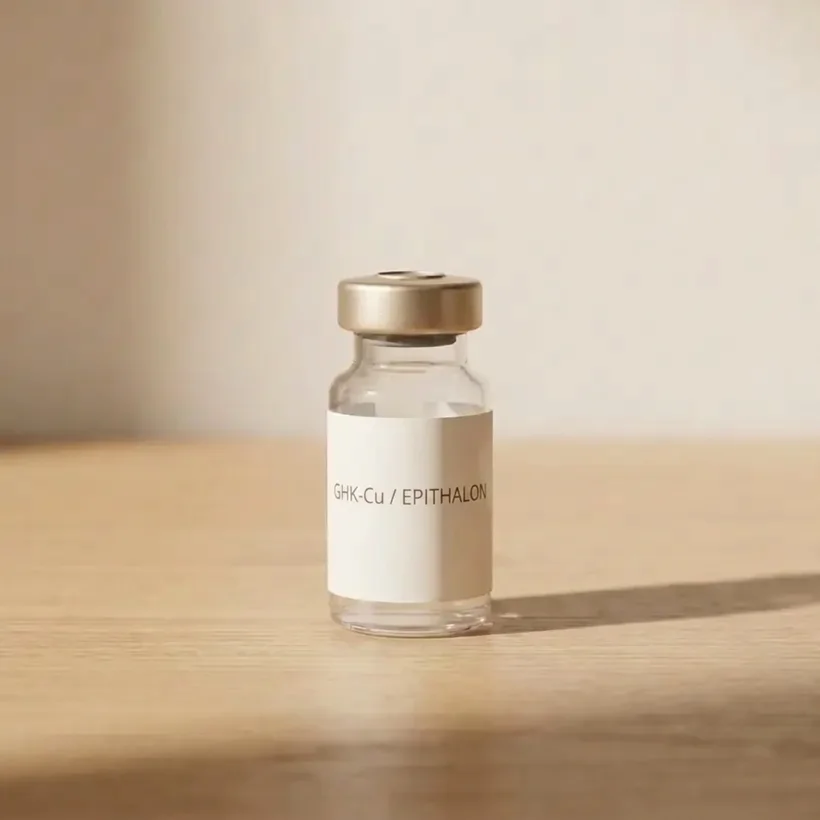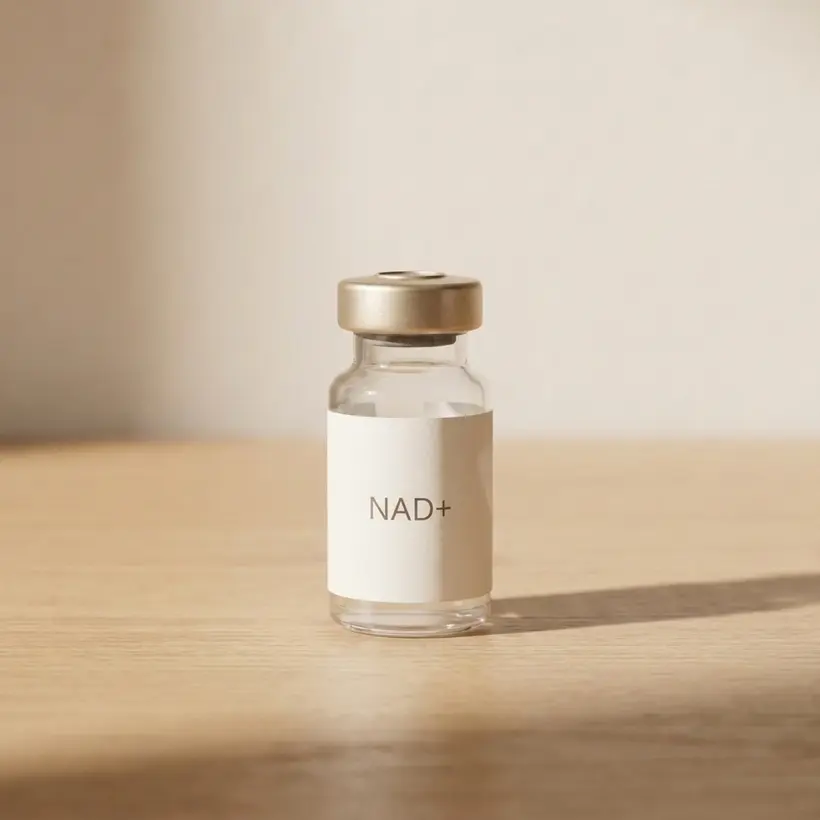
NAD+ Peptide Complex
Injectable

Anti-Aging & Longevity

A coenzyme complex studied in cellular-energy and DNA-repair research

01

Supports cellular NAD+ biosynthesis via the NAMPT salvage pathway

02

Research links NAD+ availability to mitochondrial energy production

03

Required co-substrate for all seven sirtuins (SIRT1-7) studied in longevity research

Anti-Aging & Longevity

NAD+ Peptide Complex

NAD+ (nicotinamide adenine dinucleotide) is the coenzyme involved in over 500 enzymatic reactions, studied in research on cellular energy, DNA repair, and sirtuin signaling.

1,000mg vial · 100mg/mL · 10mL99.5% purity

Choose your plan

Peptide checkout

1. Purchase type

2. Choose billing term

How this plan works

Pay

$429.30 today

Renews every 3 months

Ship

Every 3 months

After provider approval

Refills

Paid quarterly

Continues until canceled

Continue with 3-month plan → $429.30
Peptide checkout
Provider review
Ships after approval

A U.S.-licensed provider reviews your request before it ships. If you are not approved, you are refunded in full.

Quick answer

NAD+ (nicotinamide adenine dinucleotide) is the coenzyme involved in over 500 enzymatic reactions, studied in research on cellular energy, DNA repair, and sirtuin signaling.

Format

Injectable

Best use

Anti-Aging & Longevity

Evidence

Research-framed

503A Pharmacy
USP <797> Sterile
Provider-Reviewed
Lab-Tested
Cold-Chain
HIPAA

Deep research

About NAD+ Peptide Complex

NAD+ (nicotinamide adenine dinucleotide) is a dinucleotide coenzyme with a molecular weight of 663.43 Da, composed of two nucleotides joined through their phosphate groups: one containing an adenine base, the other containing nicotinamide. It exists in oxidized (NAD+) and reduced (NADH) forms and serves as the primary electron carrier in over 500 enzymatic reactions. NAD+ is the key substrate for three major enzyme families: sirtuins (SIRT1-7), poly(ADP-ribose) polymerases (PARPs), and CD38/CD157 ectoenzymes. Human tissue measurements (Zhu et al., 2015) report NAD+ levels declining by approximately 50% between ages 40 and 60.

NAD+ itself has poor oral bioavailability due to rapid degradation in the gastrointestinal tract, which is why parenteral formats are used in research. Lyophilized NAD+ complex is stored at -20C; reconstituted solution is refrigerated at 2-8C and protected from light, since NAD+ degrades under UV exposure. The solution should remain clear and colorless, as yellowing indicates degradation. Stability range is pH 6.5-7.5.
Key benefits

What researchers have looked at

1

Supports cellular NAD+ biosynthesis via the NAMPT salvage pathway

2

Research links NAD+ availability to mitochondrial energy production

3

Required co-substrate for all seven sirtuins (SIRT1-7) studied in longevity research

4

Investigated for DNA-repair capacity through PARP enzyme support

5

Neuroprotective effects reported in aged animal models

6

Restored glucose tolerance reported in preclinical metabolic studies

7

Human precursor trials reported 40-90% increases in whole-blood NAD+ levels

8

Studied alongside Epithalon in anti-aging research protocols

Mechanism

How NAD+ Peptide Complex is positioned in research

Research describes the age-related NAD+ decline as driven by increased consumption by CD38, decreased synthesis through the NAMPT salvage pathway (which accounts for roughly 85% of cellular NAD+ production), and PARP activation from accumulated DNA damage. Because all seven sirtuins require NAD+ as a co-substrate, NAD+ availability is described as rate-limiting for sirtuin activity: SIRT1 is studied in relation to insulin sensitivity and mitochondrial biogenesis via PGC-1alpha, SIRT3 in mitochondrial protection, and SIRT6 in telomere integrity and DNA repair.

Published research

What the research has explored

Preclinical work includes NAD+ restoration reversing age-related muscle degeneration and improving mitochondrial markers in aged mice (Gomes et al., Cell, 2013) and restored glucose tolerance in aged and diet-induced diabetic mice (Yoshino et al., Cell Metabolism, 2011). In human research, NAD+ precursor trials (METRO trial, N=120) reported 40-90% increases in whole-blood NAD+ with good tolerability, and long-term oral precursor studies up to 12 months reported no organ-specific toxicity. Transient flushing and mild nausea are described with rapid intravenous administration and resolve by slowing the rate.

For research and educational purposes only. References to studies describe published literature and do not constitute medical claims, efficacy guarantees, or treatment recommendations.

Questions people ask

Frequently asked questions

What is the NAD+ Peptide Complex?+

It is a parenteral NAD+ (nicotinamide adenine dinucleotide, MW 663.43 Da) formulation supporting the coenzyme involved in over 500 enzymatic reactions, studied in research on cellular energy, sirtuin signaling, and DNA repair.

Why injectable instead of oral?+

NAD+ has poor oral bioavailability because it degrades rapidly in the gastrointestinal tract, so research protocols use parenteral administration for direct systemic availability.

How is it stored?+

Lyophilized at -20C; reconstituted solution is refrigerated at 2-8C and protected from light. The solution should stay clear and colorless, since yellowing indicates degradation.

Concentration

100mg/mL · 10mL

Purity

99.5%

Format

Injectable

Vial

1,000mg vial

Compare next

Related peptides