BPC-157
Top SellerInjectable

Recovery & Healing

The body protection compound studied for tissue repair

01

Studied in research for its role in tendon, ligament, and soft-tissue repair

02

Research has explored its upregulation of VEGF and EGF signaling and angiogenesis

03

Investigated in models of NSAID-related gastrointestinal stress

Recovery & Healing

BPC-157

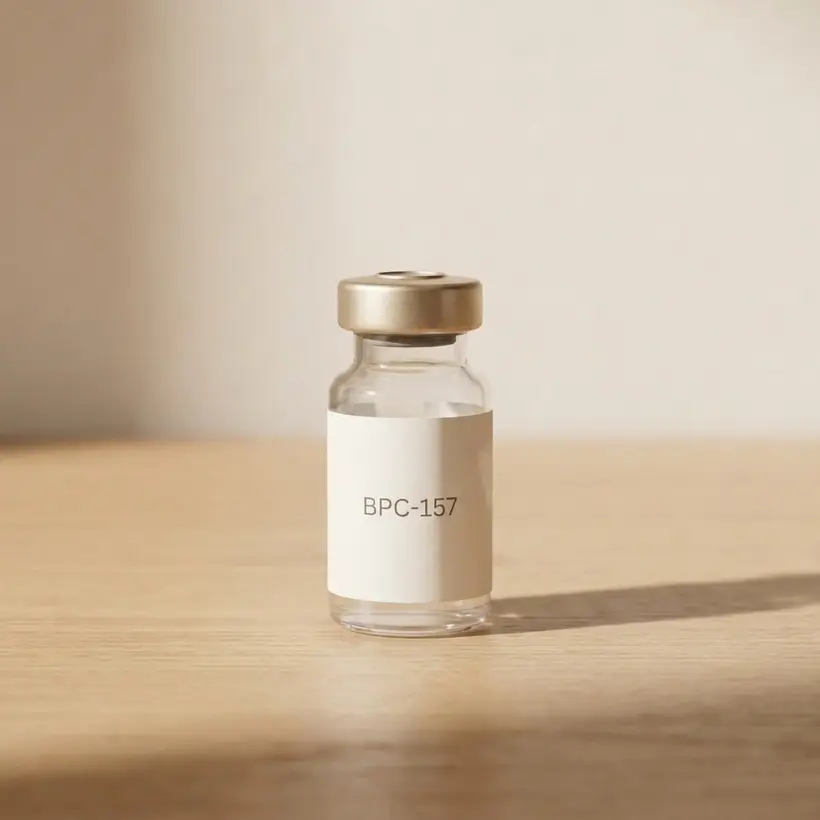
BPC-157 (Body Protection Compound-157) is a pentadecapeptide derived from human gastric juice.

15mg vial · 3mg/mL · 5mL99.2% purity

Choose your plan

Peptide checkout

1. Purchase type

2. Choose billing term

How this plan works

Pay

$402.30 today

Renews every 3 months

Ship

Every 3 months

After provider approval

Refills

Paid quarterly

Continues until canceled

Continue with 3-month plan → $402.30
Peptide checkout
Provider review
Ships after approval

A U.S.-licensed provider reviews your request before it ships. If you are not approved, you are refunded in full.

Quick answer

BPC-157 (Body Protection Compound-157) is a pentadecapeptide derived from human gastric juice.

Format

Injectable

Best use

Recovery & Healing

Evidence

Research-framed

503A Pharmacy
USP <797> Sterile
Provider-Reviewed
Lab-Tested
Cold-Chain
HIPAA

Deep research

About BPC-157

BPC-157, formally known as Body Protection Compound-157, is a stable pentadecapeptide with the amino acid sequence Gly-Glu-Pro-Pro-Pro-Gly-Lys-Pro-Ala-Asp-Asp-Ala-Gly-Leu-Val (GEPPPGKPADDAGLV). It has a molecular weight of approximately 1419.53 Da and carries a net negative charge at physiological pH. The peptide is a partial sequence derived from a larger protective protein identified in human gastric juice, designated BPC. Unlike many peptides, BPC-157 is notably stable in human gastric juice for extended periods (over 24 hours), an unusual property for a peptide of its size that makes it of interest for both injectable and oral research protocols.

For research applications, BPC-157 is typically stored as a lyophilized powder at -20C, where it remains stable for extended periods. Once reconstituted in bacteriostatic water (0.9% benzyl alcohol), the solution is refrigerated at 2-8C. Repeated freeze-thaw cycles degrade the peptide and are avoided. Reconstitution is performed by gently directing bacteriostatic water down the vial wall rather than directly onto the powder cake to limit foaming.
Key benefits

What researchers have looked at

1

Studied in research for its role in tendon, ligament, and soft-tissue repair

2

Research has explored its upregulation of VEGF and EGF signaling and angiogenesis

3

Investigated in models of NSAID-related gastrointestinal stress

4

Research describes bidirectional modulation of the nitric oxide (NO) system

5

Studied in nerve-injury models for its role in functional recovery

6

Examined for anti-inflammatory signaling without immunosuppressive activity

7

Notably stable in gastric juice for 24+ hours, supporting oral research protocols

8

No tumor-promoting activity reported in published studies

Mechanism

How BPC-157 is positioned in research

BPC-157 has been described in research across a broad set of signaling pathways. Studies report that it interacts with the expression of vascular endothelial growth factor (VEGF), epidermal growth factor (EGF), and their receptors, pathways associated with angiogenesis and epithelial repair. Research also describes bidirectional modulation of the nitric oxide (NO) system and interaction with the FAK-paxillin pathway, which governs cell adhesion, migration, and cytoskeletal organization during tissue repair. Its plasma half-life is estimated at 10-15 minutes when administered parenterally, with tissue-level effects reported to persist longer.

Published research

What the research has explored

BPC-157 has been the subject of over 100 peer-reviewed publications across multiple organ systems, the large majority in animal models. Reported work includes Achilles tendon healing models (Staresinic et al., J Orthop Res, 2003), gastrointestinal studies (Sikiric et al., J Physiol Paris, 2010), and sciatic nerve regeneration models (Gjurasin et al., Regul Pept, 2010). Toxicology assessments in animals reported no organ toxicity, no mutagenicity in Ames testing, and no established LD50 in standard protocols. Human clinical trial data remains limited.

For research and educational purposes only. References to studies describe published literature and do not constitute medical claims, efficacy guarantees, or treatment recommendations.

Questions people ask

Frequently asked questions

What is BPC-157?+

BPC-157 (Body Protection Compound-157) is a stable 15-amino-acid pentadecapeptide (sequence GEPPPGKPADDAGLV, MW ~1419.53 Da) derived from a protein identified in human gastric juice. It is studied in research for its role in tissue repair.

How is BPC-157 stored and reconstituted?+

Lyophilized BPC-157 is stored at -20C and reconstituted with bacteriostatic water, then refrigerated at 2-8C. Researchers avoid repeated freeze-thaw cycles and direct the diluent down the vial wall to limit foaming.

What pathways has BPC-157 been studied for?+

Published research describes interaction with VEGF and EGF signaling, the nitric oxide system, and the FAK-paxillin pathway. Most of this evidence comes from animal models.

Concentration

3mg/mL · 5mL

Purity

99.2%

Format

Injectable

Vial

15mg vial

Compare next

Related peptides