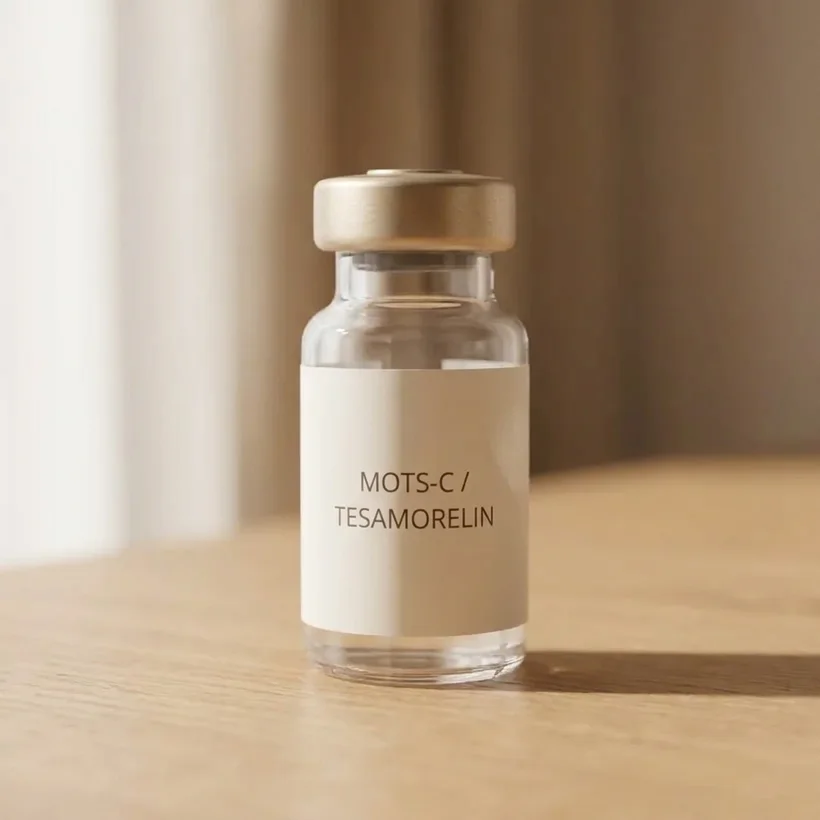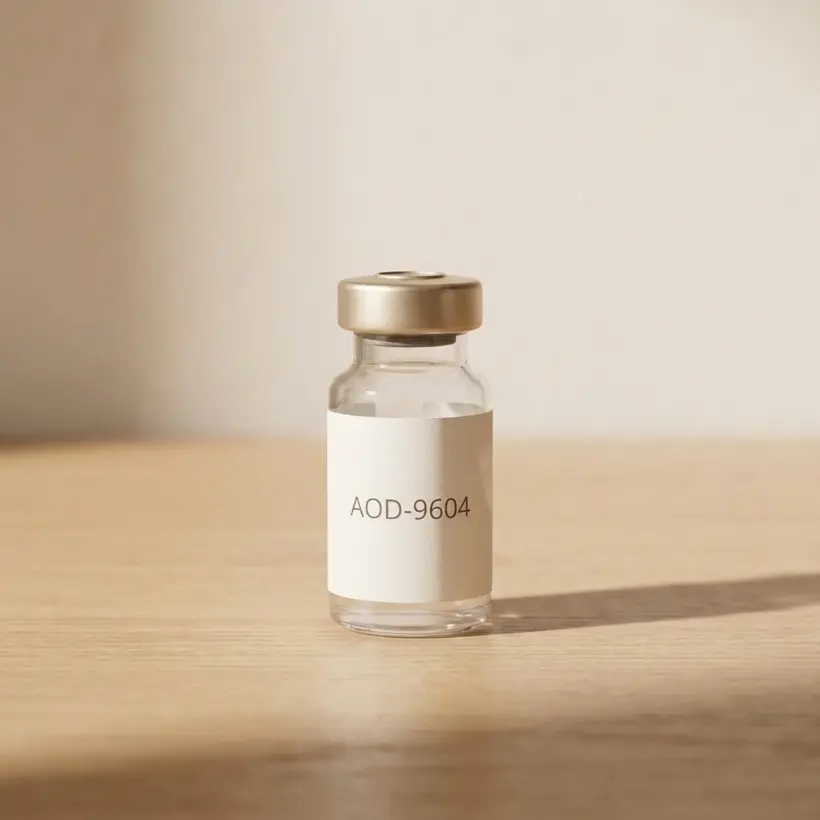
AOD-9604
Injectable

Metabolic & Fat Loss

A growth-hormone fragment studied in research on fat metabolism

01

Studied in research for its role in fat metabolism via the beta-3 adrenergic pathway

02

Research describes activation of hormone-sensitive lipase and lipolysis signaling

03

Investigated for its effect on lipogenic enzymes (ACC, fatty acid synthase)

Metabolic & Fat Loss

AOD-9604

AOD-9604 is a modified fragment of human growth hormone (hGH fragment 176-191) studied in research for its role in fat metabolism through a non-growth-hormone-receptor pathway.

6mg vial · 1.2mg/mL · 5mL99.0% purity

Choose your plan

Peptide checkout

1. Purchase type

2. Choose billing term

How this plan works

Pay

$483.30 today

Renews every 3 months

Ship

Every 3 months

After provider approval

Refills

Paid quarterly

Continues until canceled

Continue with 3-month plan → $483.30
Peptide checkout
Provider review
Ships after approval

A U.S.-licensed provider reviews your request before it ships. If you are not approved, you are refunded in full.

Quick answer

AOD-9604 is a modified fragment of human growth hormone (hGH fragment 176-191) studied in research for its role in fat metabolism through a non-growth-hormone-receptor pathway.

Format

Injectable

Best use

Metabolic & Fat Loss

Evidence

Research-framed

503A Pharmacy
USP <797> Sterile
Provider-Reviewed
Lab-Tested
Cold-Chain
HIPAA

Deep research

About AOD-9604

AOD-9604 (Advanced Obesity Drug-9604) is a synthetic 16-amino-acid peptide corresponding to the C-terminal fragment of human growth hormone (hGH), specifically amino acids 176-191, with a tyrosine residue added at the C-terminus for stability. Its sequence is Tyr-Leu-Arg-Ile-Val-Gln-Cys-Arg-Ser-Val-Glu-Gly-Ser-Cys-Gly-Phe-Tyr, with a disulfide bond between Cys182 and Cys189. The molecular weight is approximately 1,815 Da (CAS 221231-10-3). Unlike full-length hGH (191 amino acids, 22 kDa), AOD-9604 isolates only the lipolytic domain.

Lyophilized AOD-9604 is stored at -20C before reconstitution. It is reconstituted with bacteriostatic water (0.9% benzyl alcohol), added slowly along the vial wall and gently swirled rather than shaken, since vigorous handling can damage the disulfide bond critical to its structure. Reconstituted solution is refrigerated at 2-8C. The disulfide bridge between Cys182 and Cys189 is important for activity.
Key benefits

What researchers have looked at

1

Studied in research for its role in fat metabolism via the beta-3 adrenergic pathway

2

Research describes activation of hormone-sensitive lipase and lipolysis signaling

3

Investigated for its effect on lipogenic enzymes (ACC, fatty acid synthase)

4

Does not bind the growth hormone receptor in a way that activates IGF-1 production

5

Holds FDA GRAS status (GRN 000620) based on toxicology and clinical safety data

6

Studied in cartilage and proteoglycan-synthesis research

7

Examined in clinical research on body composition

8

Of interest in combination protocols with GLP-1 and other metabolic peptides

Mechanism

How AOD-9604 is positioned in research

Research describes AOD-9604 acting on the beta-3 adrenergic receptor pathway in adipocytes, where it is associated with hormone-sensitive lipase (HSL) activity and with downregulation of lipogenic enzymes including acetyl-CoA carboxylase (ACC) and fatty acid synthase (FAS). A key distinction noted in the literature is that it does not bind the growth hormone receptor in a way that activates the JAK2-STAT5 cascade responsible for IGF-1 production. Plasma half-life is approximately 30-45 minutes following subcutaneous injection.

Published research

What the research has explored

AOD-9604 has been evaluated in clinical research including a Phase 2b randomized, double-blind, placebo-controlled trial conducted by Metabolic Pharmaceuticals, and an earlier Phase 2a trial published in the Journal of Clinical Endocrinology and Metabolism. It received FDA GRAS (Generally Recognized As Safe) status in 2007 (GRN 000620). Across clinical trials, no changes in glucose homeostasis or IGF-1 levels were reported, and injection site reactions were comparable to placebo.

For research and educational purposes only. References to studies describe published literature and do not constitute medical claims, efficacy guarantees, or treatment recommendations.

Questions people ask

Frequently asked questions

What is AOD-9604?+

AOD-9604 is a 16-amino-acid synthetic fragment of human growth hormone (residues 176-191 plus a C-terminal tyrosine, MW ~1,815 Da). It is studied in research on fat metabolism and is one of the few peptides with FDA GRAS status (GRN 000620).

How is it different from growth hormone?+

It isolates only the lipolytic domain of hGH and, per the research literature, does not activate the growth hormone receptor pathway responsible for IGF-1 production or bone growth.

How is AOD-9604 handled?+

It is stored lyophilized at -20C and reconstituted gently with bacteriostatic water to protect its disulfide bond, then refrigerated at 2-8C.

Concentration

1.2mg/mL · 5mL

Purity

99.0%

Format

Injectable

Vial

6mg vial

Compare next

Related peptides